
The Appeal of a “Colorful Mix”: What the Refugee and Migrant Festival Shows Us
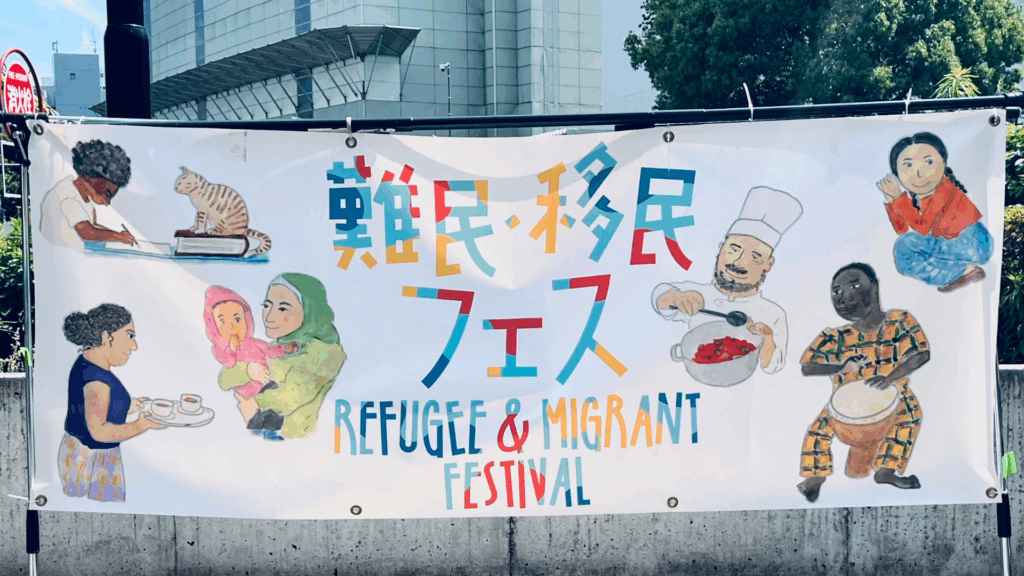
On Saturday, June 6, 2026, the 7th Refugee and Migrant Festival was held at St. Andrew’s Church near Tokyo Tower in Minato City, Tokyo. This charity event started in 2022. Its goal is to help people learn about, connect with, and support refugees and migrants living in Japan.
There were many booths around the venue. Visitors could buy food, crafts, and clothing from different countries and ethnic groups, including African nations, Myanmar, Sri Lanka, Chile, the Philippines, and the Kurdish community. There were also workshops where people could learn about different cultures. By eating, learning, experiencing, and enjoying these activities, visitors supported refugees and migrants. According to the organizers, more than 4,000 people attended the festival in total.
The organizers describe the festival as “a rich and colorful mix.” One of the committee members, illustrator Maki Kanai, said, “During festival meetings, people from many countries and regions share their ideas together. It is interesting because their opinions often show the character of their cultures.”
According to the United Nations, migrants are people who live in a country other than the country where they were born or whose nationality they hold. The term also includes people who move to another country and stay there for more than one year. Refugees, on the other hand, are people who leave their home countries because of persecution, conflict, or other serious dangers and need international protection.
To be officially recognized as a refugee in Japan, a person must apply for refugee status. If the application is rejected, the person may be deported or placed in an immigration detention center. However, under certain conditions, some people are given a special status called provisional release. This allows them to avoid both deportation and detention.
Inside the church’s main hall, experts held a talk session about the situation of people on provisional release. People with this status cannot work, often have difficulty receiving medical care, and are not allowed to travel across prefectural borders. As a result, they cannot live what many would consider a normal life. Their children face similar restrictions and often experience difficulties related to identity, education, and many other areas of life. The speakers talked about the unfair situations these families face and the importance of providing emotional support. The hall was full, showing that many people are interested in this issue.
Meanwhile, visitors enjoyed performances such as gospel music and dance on the outdoor stage. The stage program was hosted by David Yano, a musician with both Ghanaian and Japanese roots. Based on his own experiences growing up, he gives talks about human rights across Japan.
Yano told the audience, “When I talk about diversity, some people say that I am bringing the idea from overseas. But I am simply sharing what I learned from the Japanese teachers and mentors who helped me when I was young. Because of that, I believe diversity has always existed in Japan.”
As if responding to Yano’s message, the final stage program was the “Toraji Ondo” dance, led by Korean grandmothers from the Korean community in Kawasaki. They are sometimes called the “senior migrants” of Japan. Visitors, performers, and exhibitors all danced together in a joyful mix. The festival ended with many smiles and warm applause.
One woman who attended the festival for the first time said, “Learning about the world through food is very easy for us. I think that is a wonderful thing. While I was eating, I could also listen to speeches and naturally learn about the situations of migrants and refugees. I hope there will be more events like this.”
Under the clear skies before the rainy season began, many people enjoyed this celebration of different cultures coming together and carried hope for living together in harmony into the future.