
Orcas in Captivity
Detrimental Psychological Impact of Captivity
Zoos and aquariums have long been sources of entertainment for people of all ages, providing opportunities to see wild animals up close. There are 10,000 zoos and over 1,100 aquariums worldwide. Advertised under the guise of conservation efforts and education, zoos and aquariums have long claimed to preserve and protect animals. However, the reality of many zoos and aquariums tells a different story.
According to World Animal Protection, a global organization working to end the abuse of animals, zoochosis is “a psychological condition that affects wild animals held in captivity, leading to repetitive, compulsive behaviors not seen in the wild.” These behaviors, sometimes called “stereotypical behavior”, do not seem to have a goal or purpose. They include pacing, head rolling, extreme licking, hair/feather pulling, outline swimming, bar-biting, and self-mutilation. It can affect nearly all species held in captivity, including polar bears, elephants, giraffes, dolphins, hippopotamuses, and birds. Many orcas held at marine parks exhibit repetitive swimming patterns, rocking and swaying, and even self-harm.
Orcas in the Wild
With their own communication styles and complex social systems, orcas are one of the most intelligent animals on the planet. Typically, they move in groups called “pods”, which are led and guided by older females who pass down survival strategies and wisdom to younger orcas. Different pods have unique cultures that use different hunting techniques and vocalizations, which are passed down through generations. Their pods are extremely close-knit, and adult offspring remain with their mothers their entire lives.
Orcas have an innate drive to swim vast distances, traveling up to 60 kilometers and diving from 30 to 150 meters several times a day, to maintain exercise and forage for food. They can swim up to 45 kilometers per hour, but usually cruise at slower speeds, around 13 kilometers per hour. Orcas are apex predators, meaning that they have no natural predators. They eat a variety of prey, including fish, whales, seals, and even sharks, with each orca community having its own traditional diet.
Captured Orcas
When captured, orcas are separated from their families and taken to foreign locations on their own, where they are placed with artificial families. Moreover, orcas born in captivity are also often separated from their mothers at just two to four years of age. There have been documented incidents of mother orcas displaying grief-stricken behaviors after separation. Otherwise known for their playful and curious personality, some orcas develop dangerous levels of aggression towards other orcas and their trainers, some of which have led to fatalities, due to the stress of captivity. According to orca researcher Howard Garrett, there are no recorded fatal attacks on humans by orcas in the wild.
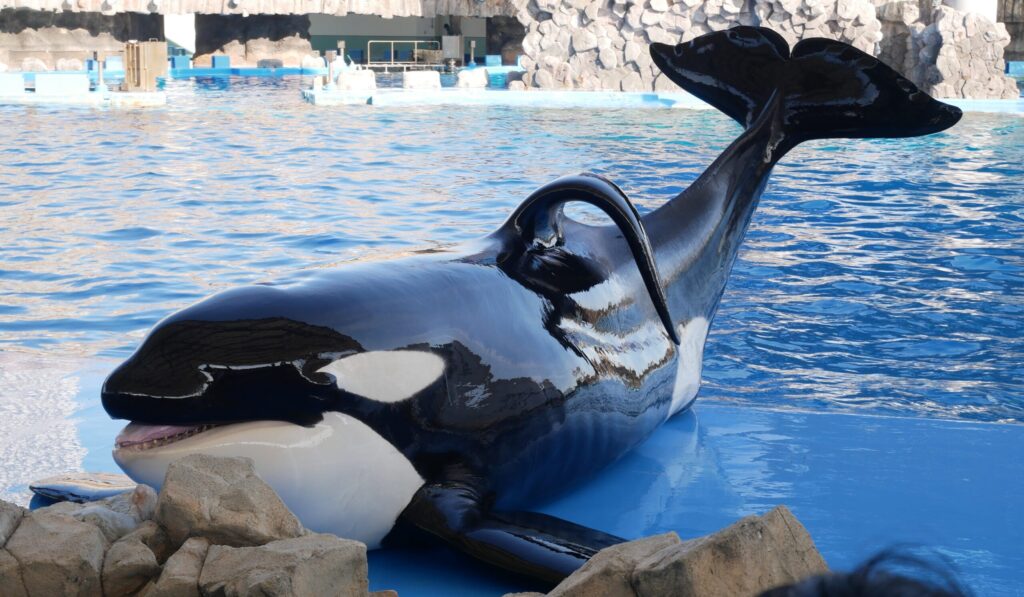
In captivity, most orcas die in their teens and 20s, and almost 100% of male orcas have dorsal fins that have partially or completely collapsed. Although the reasoning behind this phenomenon is widely debated, less than 1% of wild orcas experience dorsal fin collapse.
Blackfish, a documentary about Tilikum, an orca held at SeaWorld in Florida, offers a glimpse into the harrowing reality of captivity and the exploitative nature of marine parks. This movie showed a tragedy that happened at SeaWorld. It also showed the cruel way orcas are captured and how they suffer stress from living in small tanks instead of the huge ocean.
Humans Watching, Orcas Being Watched
Since the release of Blackfish, there is a growing sentiment against the captivity of orcas, but there are still at least 52 orcas held in captivity worldwide. Although it is fascinating to see wild sea creatures up close at aquariums and marine parks, it is important to remember the cost of accessibility and convenience. Blackfish shows clips of SeaWorld employees making false statements about orcas’ lifespans and dorsal fin collapse statistics to their visitors, which not only makes them an unreliable source of education, but also completely misinformed caretakers of orcas.
In Japan, there are still a few aquariums that hold orcas captive, some of which have been severely criticized by global animal rights groups. Moreover, Tomomi Kamiyama, an associate professor of Toyama University, states, “The problem lies in the fact that paying spectators are seeking circus elements rather than educational aspects from this facility. I believe this issue reflects the relationship between human society and animals.”
Written by まりか