
Anne Frank’s Legacy
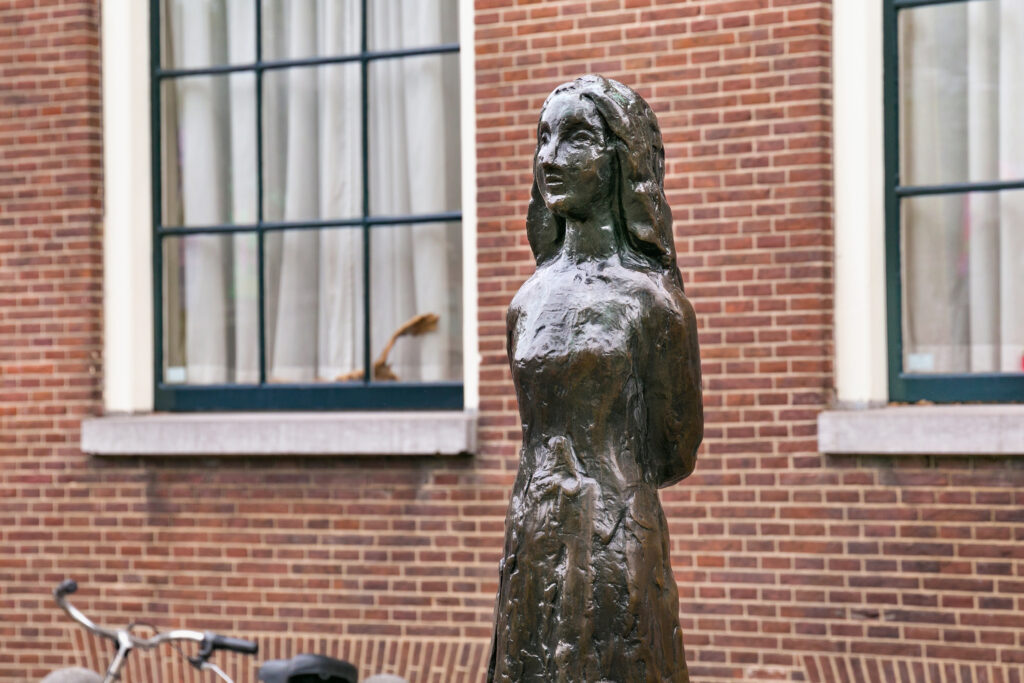
Who Was Anne Frank?
Anne Frank was born in Frankfurt am Main, Germany, on June 12th, 1929, to parents Otto and Edith Frank. They came from upper-middle-class German-Jewish families. She had a sister who was three years older named Margot. With Hitler’s rise in popularity and the spread of antisemitic sentiment, the family relocated to Amsterdam, in the Netherlands. Anne enjoyed her first few years in the Netherlands, quickly making new friends, learning Dutch, and doing remarkably well in school.
In September 1939, Nazi Germany invaded Poland, marking the beginning of World War 2. In May 1940, the Nazis invaded the Netherlands, and 5 days later, the Dutch army surrendered. The Nazis started introducing new laws and regulations that restricted all aspects of the lives of Jewish people. In July 1942, when Margot was just 16, she received an official letter from the government, ordering her to work at a “labor camp” in Germany. The next day, the family went into hiding in the annex of his business premises.
On her thirteenth birthday, June 12th, 1942, a few weeks before the family went into hiding, she was gifted a diary from her parents. For two years, until she was captured and taken to Auschwitz, she continued to write about her experiences in hiding. In 1944, Anne heard an announcement over the Dutch underground radio, telling citizens to keep documents and diaries to record the reality of the war, so they could aid in prosecuting war criminals after the war. The annex was raided by the Gestapo on August 4th, 1944, and everyone in hiding was taken and transported to Auschwitz.
Publication of the Diary
Otto Frank was the only member of the family to survive the concentration camps. When he returned, Miep Gies, one of the people who had helped the Frank family hide in the annex, gave Anne’s diary to him. She had found it in the attic after the raid and had intended to return it to Anne.
He had always valued education and had recognized his daughter’s inquisitive nature. She was always questioning everything from a very young age. He placed her in a Montessori school, an environment designed to foster independent thinking and creativity. Otto made it his life’s mission to share Anne Frank’s story and spread the message of unity and peace to all young people. He was personally involved in compiling, editing, and publishing her diary. On June 25th, 1947, “The Secret Annexe” was published. It has now been translated into over 75 languages and is taught and read by people all over the world.
Never Again
Never again is a slogan born from the Holocaust, as a reminder to the world of what was lost, and a promise that such darkness must never return. The atrocities imposed on the Palestinian people right now, marked by mass displacement and a devastating humanitarian crisis, reveal the consequences of what happens when the world allows history to repeat itself. As Jewish Voice for Peace, a Jewish organization supporting Palestine, stated, “As Jews, we know what happens when people are called animals”; a direct response to former Israel Defense Minister Yoav Gallant’s public declaration that “Israel is fighting human animals”. They continued, “We can and must stop this. Never again means never again – for anyone.” It is a message Anne Frank herself may have understood: the suffering of one people is the concern of all people.
Written by まりか