
“The Bannister Effect”: Breaking Invisible Limits
The four-minute mile was for decades considered the absolute ceiling of human limits. Physicians warned that the heart could not survive such an effort. It seemed that even with generation after generation of the world’s best middle-distance runners getting close, the milestone would remain impossible. Then, on the 6th of May 1954, Roger Bannister ran 3:59.4 at Oxford and dismantled the myth entirely.
What happened next is the more interesting story. Just 46 days later, John Landy ran 3:57.9. Within a year, three more men had gone sub-four. Within two and a half years, ten runners had broken a barrier that had supposedly defined the limits of human physiology for generations. The wall was never physical. It was a mental one that needed just one leader to kick it down for the rest to follow.
Seventy years on, we are watching the same phenomenon play out again. This time in two events simultaneously.
The 2 Hour Limit
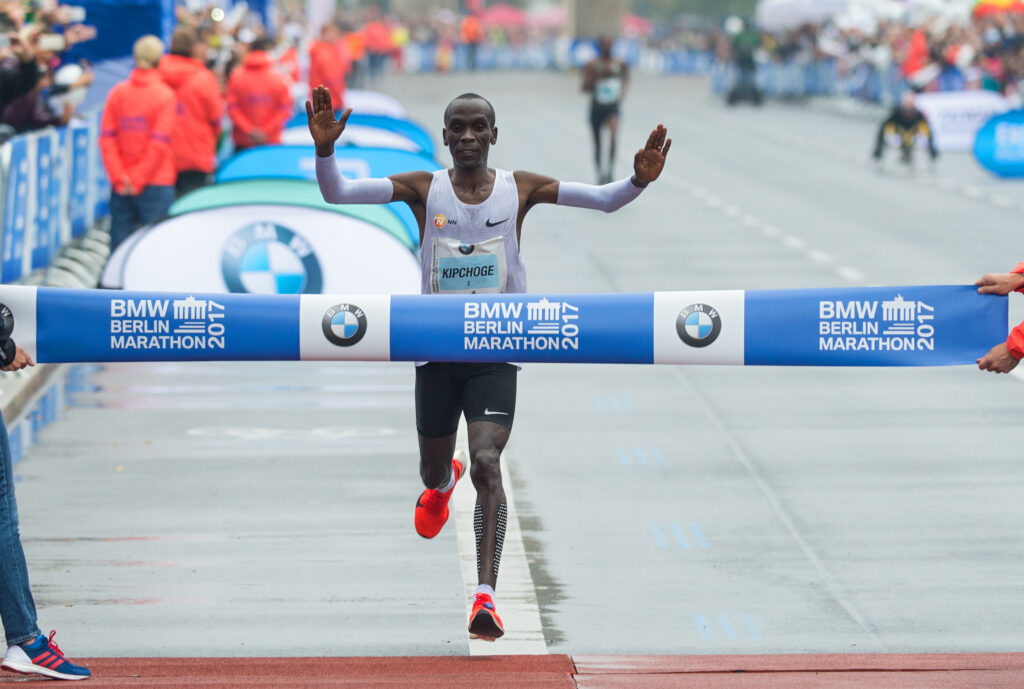
In 2019, Eliud Kipchoge first proved the impossible was reachable by running a 1:59:40 marathon. This record however was an unofficial attempt with specially curated conditions, meaning the official two-hour barrier remained intact. This feat sparked a new era of belief and ambition for the next generation of runners that culminated on 26 April 2026 at the London Marathon, where Sebastian Sawe finally made official history as he crossed the line in 1:59:30.
Just as Landy followed Bannister, the next man soon followed him through the door. This time it only took 11 seconds as Yomif Kejelcha (1:59:41) finished in second and Jacob Kiplimo (2:00:28) placed third, making it three men going under the previous world record.
To grasp the insanity of Sawe’s speed in reaching the record, his average pace across the race was equivalent to running a 17-second 100-meter sprint 422 times consecutively. Even more staggering, Sawe’s 10km split at the 30-40km mark known as “the wall” (for being where runners tend to slow down) of 27:36 would have been fast enough to win the previous year’s 10km World Championship Title.
Duplantis and the Chaser
Another big name in breaking records is the pole vaulter Armand “Mondo” Duplantis. Duplantis has broken the world record fifteen times with his current mark sitting at 6.31 meters. For years Duplantis had sat lonely at the top attempting to break his own records as no other vaulter even attempted a vault of within ten centimeters of his current record.
Then, in February 2026, Greece’s Emmanouil Karalis leapt 6.17 metres, becoming the first pole vaulter to shrink the gap between Duplantis and everyone else with a nine-centimeter personal best, cleared in one explosive session. He felt so good he attempted the world record immediately after.
Karalis has spent years racing in Duplantis’s shadow. That proximity is everything. The gap between Duplantis and the rest of the world has shrunk by 17 centimetres in just thirteen months and it’s not just Karalis. For the first time in history 5 vaulters cleared 6m+ in the same year and this was all before the end of February.
Roger Bannister showed the world that the greatest barriers in sport are rarely physical. Once one athlete proves a psychological barrier can be broken, the impossible doesn’t stay impossible for long.
Written by Sean Furniss