
The Truth About Hygiene and Colonialism
Impact of Colonial Interests
When discussing development, European and East Asian countries are often given as examples of “civilized” and “forward” societies. However, before the widespread colonization of African and Asian regions by the West, societies in these regions had already developed complex systems more advanced than those found in much of Europe at the time. One example is their advanced drainage and sewage systems.
Colonial powers governed all areas, including politics, economic revenue, and scientific knowledge. They replaced the policies already in place and justified their own as more scientific and moral. However, historical records suggest that these justifications were used to reshape colonized societies to expand European commercial interests. The expansion of railway networks in colonial Punjab, India, placed pressure on forests, which resulted in detrimental effects on the environment and people’s livelihoods. Construction along rivers altered natural drainage patterns, making some areas more prone to floods. In the name of advancement, European colonial powers undermined the autonomy of Africa and Asia
Advanced Sanitation Systems in West Africa and South Asia
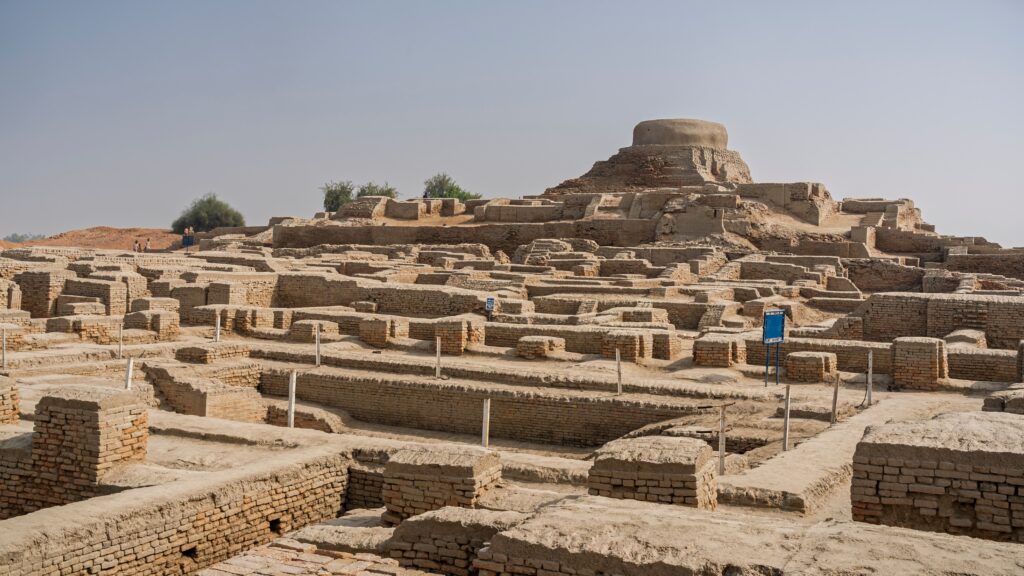
The Indus Valley civilization (2600-1900 BC) had advanced plumbing, sewage, and drainage systems. Mohenjo-daro, the biggest city in the ancient Indus Valley Civilization, located in modern-day Sindh, Pakistan, had an exceptional drainage system. Vertical pipes in the walls connected to chutes opening on the street drained wastewater from the house. All the streets in the neighborhood had drains made of baked brick, fit together with mud mortar. An intricate system with traps collected bigger sediment, while smaller particles washed away, preventing their systems from clogging. These drains were covered with brick slabs and underground, which prevented odor, and were regularly flushed out. The drainage system ensured a constant flow of water so that sewage would not pile up or overload. This shows their value of hygiene and sanitation, and their intricate urban planning. This also demonstrates their advanced understanding of engineering.
In 1817, a British explorer named Thomas Bowdich traveled to Kumasi, the capital city of the Ashanti Empire (1701-1901) in present-day Ghana on a diplomatic mission. He was surprised when he discovered that houses in this city had indoor toilets with sophisticated plumbing systems. These toilets were flushed using gallons of boiling water, which not only removed waste but also limited the spread of diseases. They had mastered the usage of pipes and drains to create an advanced system with a high level of cleanliness and hygiene, and also had acquired vast knowledge about disease prevention.
Meanwhile, people were using cesspits and chamber pots as toilets in the United Kingdom. Private bathrooms were limited, and records show that even in 1784, people living in large mansions were urinating in chamber pots, openly visible from the dining table. Some cesspits were emptied by “night-men” while others were connected to underground containers for sewage called cesspools, or dumped in the River Thames. Unlike the flowing drainage systems in Mohenjo-daro, water remained stagnant in the UK, which resulted in a strong odor and contamination. In 1858, due to low river levels, as well as the widespread use of flush toilets, sewage from the water washed up on the river banks. The smell was so nauseating and intolerable that it became known as the Great Stink. At the time, people in the UK were not yet aware that diseases could spread through water, and people in London continued to use the Thames for drinking and washing. Diseases like cholera and typhoid spread throughout the city. Without advanced knowledge of urban planning or sewage systems, the people of the UK seemed to have lacked an understanding of hygiene.
Lasting Impacts of Colonialism
During the war in 1874, the British burned and destroyed much of Ghana, including infrastructure and urban systems. As mentioned above, British colonization heavily impacted the natural ecosystems in Punjab, which caused devastating consequences for the local people. The atrocities committed by colonial powers in African countries and South Asia are often overlooked, while local people are instead criticized for their lack of hygiene. In reality, they were far more developed in terms of hygiene compared to their colonizers. Instead of exchanging knowledge for mutual benefit, the West violently colonized multiple countries under the false pretense of development and progress. Now, after years of colonial exploitation and extraction of resources, these countries are labelled “backwards” and “dirty”. Any discussion of sanitation and hygiene in those regions must consider the potentially lasting, harmful impacts of colonialism and occupation.
Written by まりか