
Crossroads
It finally happened in my twelfth year on American soil: I was flipped off by someone.
“To flip someone off” means to give someone the middle finger—an unmistakable and rather vulgar display of anger. The gesture is so universally understood that it has even earned a place in our emoji dictionary: 🖕. I had seen it countless times in movies, of course, but I never thought much about what it might feel like to actually be on the receiving end of one.
As it turns out, not great.
I was on a little road trip by myself that day, which, for me, was kind of a big deal. I had battled severe driving anxiety for nearly a decade, and driving had somehow become one of those unreached milestones in my immigrant journey. Being able to drive meant more than getting from point A to point B. It represented independence, freedom, and perhaps even a sense that I was finally learning how to stand on my own two feet in this country.
And that day, I was feeling it. I was relishing the open road, feeling grandiose. Confident. Like I owned the road.
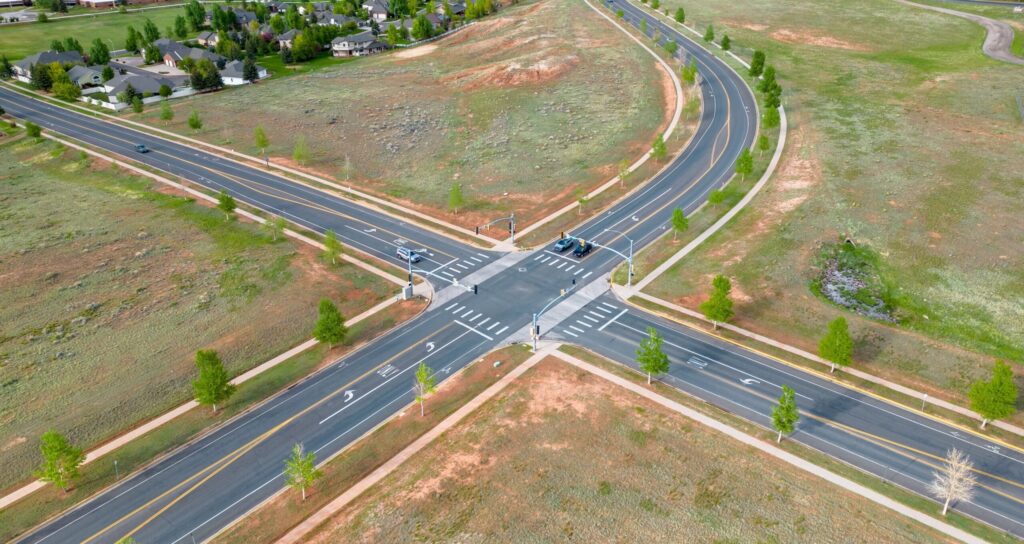
Then I came to a crossroads and made a mistake.
I went to make a turn when another driver had the right of way. He yelled something I couldn’t make out and gave me the middle finger as he passed.
Maybe because driving had come to represent my place in this country, the gesture suddenly felt much bigger than it was. The man was older and white. We were in a rural area. Within seconds, my frightened brain had filled in all the blanks: He doesn’t like people like me. I’m not welcome here.
For a moment, it felt like I wasn’t being flipped off by one angry driver. I was being flipped off—pushed away, even punished—by America itself.
But somewhere down the road, I began to pump the brakes. Not literally this time, but on the story unfolding in my head.
How would I have reacted if I were in his shoes? What if a stranger suddenly made a dangerous move in front of me while I was driving with someone I loved, someone I felt responsible for protecting?
That was when it occurred to me: what I had read as pure aggression might have begun somewhere else—with fear.
Anger can be funny that way. Sometimes what looks like an attack is really an attempt to protect or defend something underneath it: fear, hurt, sadness, vulnerability. Seeing it that way brought a surprising sense of tenderness toward that angry man on the road. Of course he was scared. Of course he reacted from his gut.
And somehow, having compassion for him created room for me to extend the same warmth toward myself, without becoming defensive. I could understand his anger without deciding that I deserved it. I could acknowledge his fear without erasing my own pain.
I had made a mistake. He was scared. I was scared, too. His aggression had hurt me. All of those things could exist at once.
There is another English expression, “to flip the script,” which means to change the usual way of thinking about or responding to something.
Maybe that is what I did that day.
Someone flipped me off, and after my fear had its say, I flipped the script. I pumped the brakes on the story I was telling myself long enough to ask what else might be true.
I think I’d like to remember that the next time I find myself at a crossroads.
Written by SAKURACO