
Youth Protests: What Have They Demanded and Achieved?
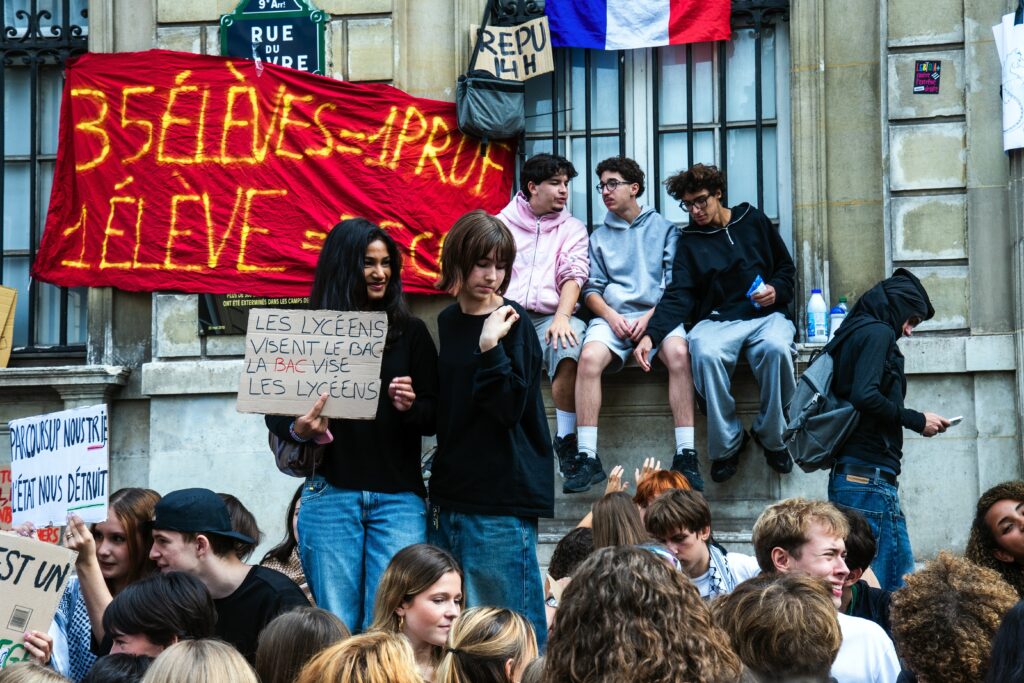
In the fall of 2026, high school students across France have been protesting against problems in their education system. Many schools are facing a shortage of teachers, overcrowded classrooms, and old school buildings. The movement began near Paris in September and gradually spread across the country. On October 6, more than 260,000 people, including teachers and parents, reportedly joined protests nationwide. About ten days later, on October 17, the protests reportedly reached their largest scale yet, with 550,000 people taking part.
At first, high school students skipped classes and gathered in front of their schools to call for better learning conditions. However, as the movement grew, clashes with the police broke out, leading to arrests and injuries. University students, teachers, parents, and labor unions also joined the protests to support the students’ demands, and the movement spread across the country. Meanwhile, some protests turned violent, with people attacking and stealing from shops and setting cars on fire, according to media reports.
Acts of violence and looting that have become goals in themselves can never be justified. However, we must also recognize that the government’s failure to respond to people’s concerns was one of the reasons the situation reached this point. The international community is now watching closely to see how France will respond to these developments.
Such protests led by young people are not limited to France. Over the past decade, high school and university students around the world have stood up against social problems. Some of their actions have grown into major social movements. In this article, we will look at several examples.
From Schools to Movements Around the World
In 2018, high school students in the United States started a major protest movement.
On February 14, a shooting at Marjory Stoneman Douglas High School in Florida killed 17 students and staff members. Students who survived the attack called for stronger gun laws to prevent similar tragedies. They organized a movement called “March For Our Lives.” The following month, large protests were held in Washington, D.C., and cities across the country.
The actions of these American students also inspired young people in other countries who were concerned about different social issues.
In August of the same year, Greta Thunberg, a 15-year-old student from Sweden, began a school strike outside the Swedish parliament to demand stronger action against climate change. She was inspired by the students in Florida who had walked out of their classes to protest against gun violence. Greta decided to take similar action to raise awareness about climate change.
Over time, more young people joined her. Her protest grew into a movement called “Fridays for Future,” in which students skipped school on Fridays to demand action on climate change. Through social media and other channels, the movement spread around the world, bringing students from many countries together.
University students have also taken part in protests. In April 2024, students at Columbia University in New York set up tents on campus to protest the war in Gaza. They demanded that the university stop investing in companies connected to Israel. The university asked the police to remove the protesters, and many students were arrested. The events attracted attention, and similar protests spread to universities across the United States.
However, the protests also caused disagreements. Some people raised concerns about antisemitic behavior, student safety, and freedom of expression. As the movement grew, tensions between people with different views also increased.
Young People Take to the Streets in Asia
In Asia, young people have also played important roles in protest movements that led to major political changes.
In Bangladesh, student protests in 2024 eventually led to the resignation of the prime minister.
The protests began over a system that reserved some government jobs for certain groups. The system had been removed in 2018, but in June 2024, a court ruled that the decision to remove it was not valid. This made many students angry. Under the system, some government jobs were reserved for groups including descendants of people who had fought in Bangladesh’s war of independence. Students demanded a fairer hiring system.
As security forces used violence against protesters and many people were killed, anger toward the government grew. The student protests developed into a nationwide movement against the government. On August 5, Prime Minister Sheikh Hasina resigned and fled the country.
The following year, in September 2025, another major youth protest movement began in Nepal.
The immediate cause was the government’s decision to block access to social media platforms such as Facebook and YouTube. However, many young people were also unhappy about political corruption, special treatment for powerful people, and a lack of economic opportunities.
The movement, often called the “Gen Z protests,” spread through the capital, Kathmandu, and other areas. Clashes with security forces left many people dead or injured. As the protests became more serious, Prime Minister K. P. Sharma Oli resigned on September 9.
In both countries, students and young people played central roles in movements that led to the resignation of national leaders. However, these political changes were not achieved by young people alone. They were also the result of wider social dissatisfaction, government responses, and other factors.
Why Do Young People Join Protests?
Looking at these movements, we can see that young people take to the streets for many different reasons.
Education, gun violence, climate change, job opportunities, and political corruption are very different issues. However, they all have something in common: they affect the lives or futures of the protesters and the people around them.
Feeling that a social problem directly affects their own lives may be one reason why young people decide to take action.
But how do young people with similar concerns come together?
Social media plays an important role in many modern social movements. It allows people to share information, find others who care about the same issues, and encourage one another to take action.
A 2020 review of research on online activism found a connection between online activities and real-world protests. It suggested that online calls for action can sometimes encourage people to join protests in the streets.
Another important idea that may help explain why people join protests is “political efficacy.”
Political efficacy is the belief that people can influence politics or society through their own actions or by working with others. The belief that a group can create change by acting together is called “collective efficacy.”
A 2008 analysis of earlier studies on social movements found that three factors were linked to participation in collective action: a sense of unfairness, a feeling of belonging to a group, and the belief that acting together can make a difference.
But how do people develop this sense of efficacy?
A study of German students protesting against university tuition fees found that feeling proud of a successful protest was connected to a stronger sense of efficacy and a greater willingness to take part in future protests. The study also found that anger over an unsuccessful protest could sometimes encourage people to take action again.
Another study examined interviews with 44 people who had joined protests in Spain in 2018. It suggested that seeing other people take action and achieving something together could help people develop a stronger sense of political efficacy.
In other words, people do not always have this belief before joining a protest. Their experiences during protests may also change how much they believe in their ability to influence society.
Of course, protests do not always achieve their goals. Sometimes governments or organizations respond to protesters’ demands, but sometimes they do not. Protests may bring attention to important problems, but they can also increase tensions in society or put participants at risk of violence.
Even so, young people around the world have continued to take to the streets and stand together over issues they care about.
Just as the actions of American high school students inspired Greta Thunberg in Sweden in 2018, a movement that begins in one place can inspire new actions somewhere else.
Protests are a way to demand political and social change. At the same time, they can give people opportunities to experience solidarity and discover what they might achieve together. These experiences may, in turn, help encourage future generations to take part in politics and make their voices heard.
Written by POLYGLOTS magazine 編集部