
AI chatbots and mental health: honest talk about a new kind of listener
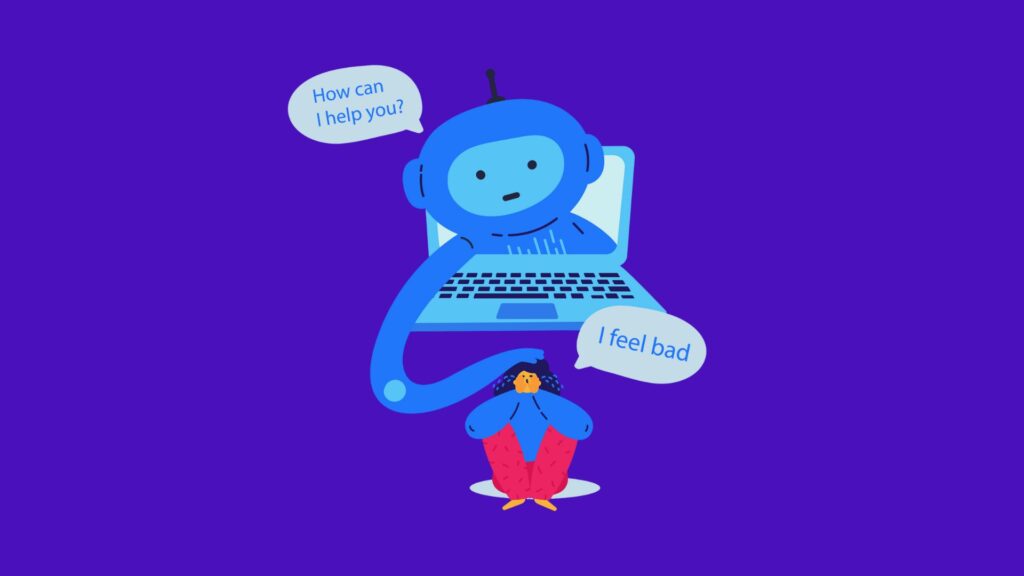
Late at night, it is easier to tell the truth to a screen. No face. No raised eyebrows. Just a small box patiently waiting for your words. AI chatbots deliver this promise, at our fingertip.
They are not therapists. They are not for diagnosis. But they can be a place to practice saying hard things or even embarrassing thoughts out loud, any time of day.
Why some people open up more
Studies show some people share more with a “virtual human” than with a person in the room. In early research, a virtual interviewer named Ellie helped users talk about mood and trauma because the interaction felt safer and less judgmental. Newer work on virtual agents and intake interviews finds the same pattern. When the pressure to perform drops—no facial reactions, no awkward silence—people feel freer to be honest. Lower fear of judgment creates space for vulnerability, and real stories come out.
What chatbots can do well
Imagine it is 2 a.m. The house is silent, your thoughts are loud. You open your phone and a chatbot is there, awake, like a small lamp in a dark room. It asks a quick check-in question, offers a journaling prompt, then walks you through a few slow breaths. If you want, it gives a tiny CBT tip, something practical you can try in the next five minutes.
For many people this feels like a soft first step, or a helpful bridge between real therapy sessions. It does not replace a clinician, but it can steady the moment and keep you moving.
Where the guardrails are needed
Newsrooms report a rapid rise in “AI mental health” tools, along with a parallel push for stronger guardrails. Reporters and clinicians still see gaps: some bots mishandle crisis language, and data practices can be murky. After investigations flagged unsafe replies, major platforms added tougher prompts and direct crisis routing in September 2025. It is progress—and a clear lesson: design can protect people, or put them at risk.
A real shift inside the industry
After criticism and a high-profile tragedy, large AI companies updated systems to detect self-harm language and to route users to human help lines more reliably. Safety teams also tuned models to avoid giving medical advice and to show clearer labels about what a chatbot is and is not. These changes are not the finish line. They are the new minimum.
Why this topic matters
There is a well-known shortage of mental-health professionals. Waiting lists are long. Costs are high. In that gap, technology will keep trying to help. The most promising use may be simple: create a low-pressure doorway where people can start talking, then guide them toward human care when things get heavy. That is not a perfect solution. It is a practical one. And if a small, kind, always-awake bot helps someone say “I need help” sooner, that is worth our attention. The next step is to make sure a human is waiting on the other side.
Written by SAKURACO