
How Is the New Year Celebrated Around the World?
The End of A Year, The Beginning of A New One
In Japan and many other countries that use the Gregorian calendar, New Year’s Eve is on December 31st, and the new year begins on January 1st. However, in many other countries, the new year is celebrated at different times of the year, or not traditionally celebrated at all.
For the lucky ones who have friends, family, and loved ones to spend the end of the year with, it is an excellent time to reminisce over the past year and look forward to the next. However, we must remember that many workers do not get a break and continue to work when the whole world seems to be on holiday. An anonymous Amazon worker wrote that people like them who work for subcontracted companies that handle Amazon deliveries start off their new year as any other ordinary day. This is the sad reality that is not commonly discussed, but must not be forgotten when enjoying our holidays for the New Year. Some people do not have the choice or the luxury to celebrate it, even though they wish to.
New Year’s Day As We Know It
The Gregorian calendar, first introduced in 1582, is now used in many parts of the world. According to that calendar, January 1st is recognized as New Year’s Day, but it is actually an unnatural day for the beginning of the year, as it does not reflect any significance in the sun’s cycle. It has no connection to the winter or summer solstice, nor the spring or autumn equinox, all of which relate to the change of the seasons. Ancient Egyptians, Phoenicians, and Persians used the autumn equinox to mark the beginning of the new year, and Ancient Greeks used the winter solstice. Japan celebrated the New Year on the first day of the lunar calendar until 1873, when it adopted the Gregorian calendar.
Ancient Romans originally used a different calendar that marked March as the first month of the year, but in 153 BCE, January 1st was declared as New Year’s Day. As English and European settlers who had been using January 1st as the beginning of the new year for about 2,000 years, colonized North America, the United States assumed the same date as the start of a new year.
Different New Year Traditions
There are many different New Year traditions worldwide, depending on the country and religion. Rosh Hashanah, the Jewish New Year, is celebrated in September or October and is a major Jewish holiday. The Islamic New Year is on the first day of the month of Muharram, according to the Islamic calendar, also known as the lunar or Hijri calendar. The Islamic New Year is not traditionally celebrated among Muslims, and therefore in many Muslim majority countries, they do not have customs for the new year. However, the younger generation celebrates with fireworks, music, and gatherings with their loved ones, similar to New Year’s celebrations in Western countries.
Ethiopia has a unique calendar of its own, which is seven years behind the Gregorian calendar. Their new year, Enkutatash, meaning “gift of jewels”, is celebrated on September 11th, coinciding with the end of the rainy season. However, the new year celebration, Enkutatash, is not linked to the church and is for everyone in the country to celebrate, regardless of their religion. Adey ababa, a type of yellow flower, is sold by vendors to use as decoration for the coffee ceremony, and offered to family members. The coffee ceremony symbolizes a blessing, a continuation, and an opening. Many attend church in the morning and come home to share a traditional feast with their loved ones.
Lunar New Year, typically celebrated in places like China, Taiwan, and other Asian countries, begins with the first new moon of the lunar calendar and ends on the first full moon. As it is based on the lunar calendar, the dates somewhat vary each year, beginning and ending between January 21st and February 20th. In Taiwan, many people celebrate the new year with their family with a feast of traditional food that symbolizes good fortune and prosperity, and similar to Japan, houses are thoroughly cleaned to welcome the new year. Many people also receive red envelopes called “hung bao (or hong bao)” as gifts, containing money. On the last day of the Lunar New Year, the Lantern Festival is celebrated. Houses are lit up with colorful lanterns at night, and traditional foods are served.
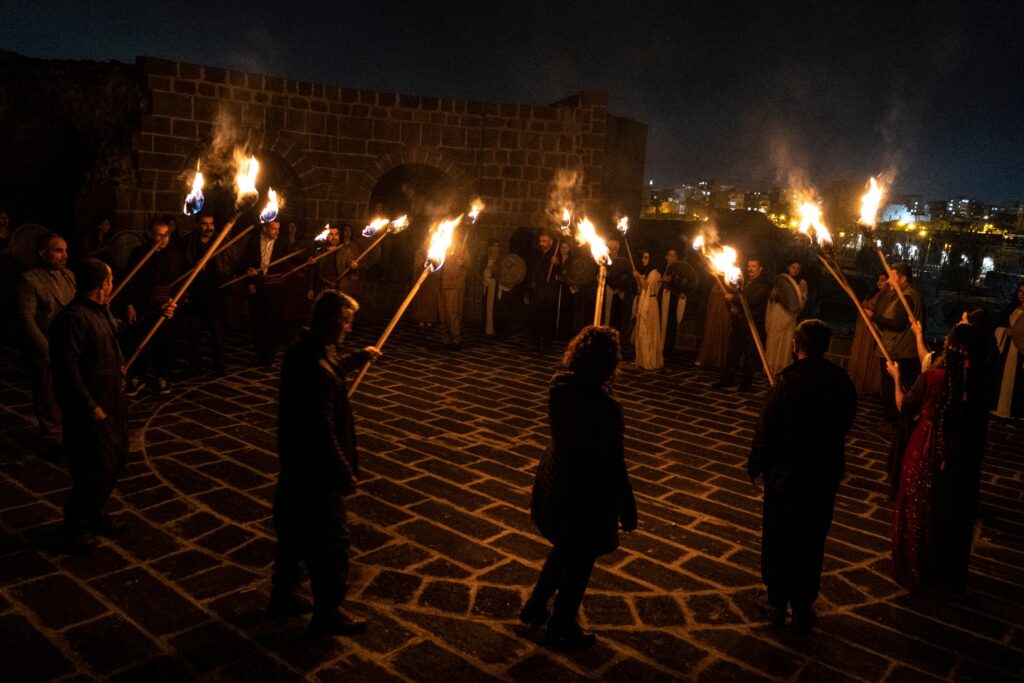
Kurdish people, the largest ethnic group in the world without a sovereign state, celebrate Newroz, which coincides with the spring equinox and is a festival that celebrates the beginning of spring. It is considered one of the most important festivals in Kurdish culture, as it came to be an opportunity to advocate for the Kurdish cause and existence. Kurdish people celebrate Newroz by dancing, singing, reciting poetry, wearing new clothes, picking beautiful spring flowers, and eating traditional food. Depending on the region of Kurdistan, traditions vary. In southern and eastern Kurdistan, bonfires are lit on the eve of Newroz, symbolizing the beginning of spring, the season of light.
In Japan, the new year is celebrated on January 1st, but it is interesting to see and learn about the different customs and traditions around the world. It is important to be aware of where the idea of New Year’s Day on January 1st came from, and how it became what it is today.
Written by まりか