
Lessons From Immigrant Populations in Japan
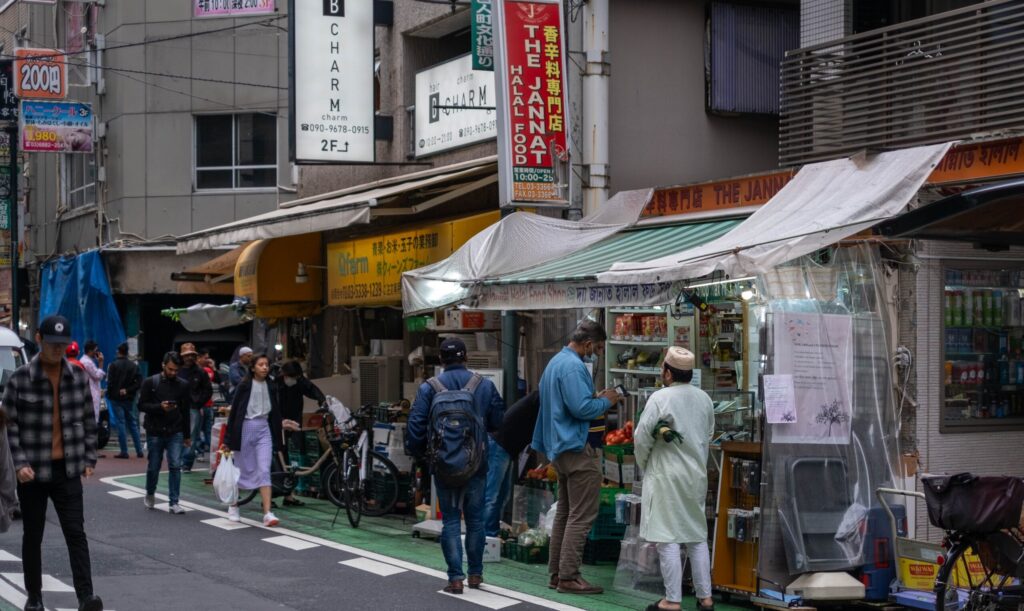
Rising Immigrant Population in Japan
For many years, Japan has been promoting tourism for economic gain and to foster foreign relations. In recent years, the Japanese government has been raising its cap on foreign workers to combat a labor shortage of essential workers in certain sectors, caused by an aging population and low wages. Japan’s farms and factories now rely heavily on the labor of foreign workers. Toshio Kusakabe, the president of a company in Gunma, told The Mainichi, “A certain political party was promoting ‘Japanese First’ ideas, but I don’t really understand what they mean by that. What I do know is that our operation would not exist without foreign workers.”
Recently, public frustration over inflation and the rising cost of living has intensified, causing some people to misdirect their anger and discontent toward immigrants. This anti-immigrant sentiment is frequently amplified by short videos circulating online, designed to cause confusion and fuel anger. There has also been widespread misinformation regarding special treatment of immigrants, and the increase of crimes by foreigners. At times, even politicians have amplified reports of crimes committed by foreigners, occasionally relying on inaccurate or unconfirmed information.
Statistics gathered by the National Police Agency, however, do not show any increase in criminal behavior by foreigners despite the surge in immigration.
In June 2025, Japan recorded 3.95 million foreign nationals living in the country, making up 3% of Japan’s population. Compared to countries like Australia and New Zealand where an estimated 30% of 30% of its population is foreign-born, Japan’s immigrant population is still relatively low.
Creating Communities of Care (Lessons From Immigrant Populations in Japan)
“Hikikomori”, a Japanese term for individuals who are socially withdrawn or isolated, has long been a discussed social issue in Japan, a country where nearly half of its population reports feeling lonely and isolated. Alain Julian, a cultural anthropologist, discusses the issue of Japan’s hikikomori as “once dismissed as anomalies, now appear as mirrors reflecting the estrangements felt by countless others”. It reveals a deeper issue of a society that is unforgiving towards those who do not conform to certain expectations, and pushes them to submit and obey, rather than accept and celebrate their differences.
On the contrary, many immigrant cultures treasure hospitality, openness, and friendliness. One such example is that of the Kurdish people, a culturally diverse population known as one of the largest stateless ethnic groups in the world. Despite centuries of systemic oppression and persecution, Kurdish people have demonstrated unwavering resilience and resistance through shared joy and community. Kurdish people greet strangers with warmth and kindness, creating an atmosphere of love, often with a cup of tea to drink together.
Another such culture is that of the Brazilian people. Although Japan and Brazil traditionally have collectivist societies putting others’ needs before their own, Japan’s collectivism focuses more on formal relationships with coworkers, whereas Brazilian collectivism focuses on informal relationships with friends and family. Latin American people express their emotions freely, reflecting an atmosphere of openness and friendliness among communities.
If these cultures and practices could be embraced by Japanese society, perhaps more people would feel secure and comfortable with who they are.
Cool Events and Spaces in Your Town!
Ikuno Park, a facility in Ikuno, Osaka that promotes multicultural exchange offers a wide range of activities that people can enjoy. Starting from a cafe space, events, sports, and arts, they also provide educational and social service support. People from all backgrounds are welcome to use this space, and the fee for the rental spaces (gym, classroom, work space) are relatively low. The Refugee and Migrant Festival that takes place every year in Tokyo is another such event where people from all backgrounds can meet and share their culture. There are performances, food and drink stalls, handcrafted goods, and much more! It is an excellent opportunity to get to know cultures that may not yet be well known in Japan.
Attending such events provides an opportunity for everyone to connect to other events that may be happening in their town. It is a chance to get to know cultures and traditions that you otherwise may have never come across. It is especially recommended to those who have a love for food, art, and crafts from different cultures.
Written by まりか