
Three Traits Nobel Prize Winners Have in Common
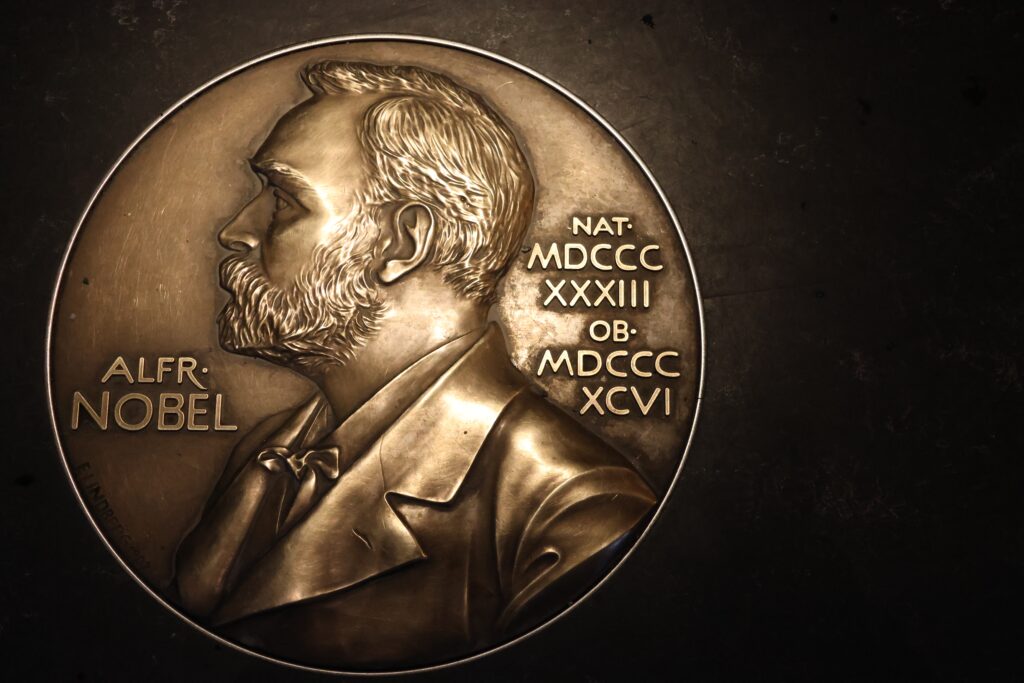
Each year, when the list of Nobel Prize winners is announced, many people look at them with great admiration. They may seem almost superhuman. Whether in medicine, physics, chemistry, economics, literature, or peace, their achievements often feel far beyond the understanding of ordinary people. We celebrate their discoveries, but we also wonder: What makes them different?
Although there is no simple answer, research suggests that many Nobel Prize winners share three important traits: deep curiosity, persistence through failure, and interdisciplinary thinking.
Deep Curiosity
Most people accept the world as it is. The sky is blue. Grass is green. The earth is brown. We rarely stop to ask why. However, people who win awards like the Nobel Prize are not satisfied with simple explanations. They ask deep and sometimes unusual questions.
For example, Albert Einstein once imagined what it would be like to ride on a beam of light. This question may sound like something from science fiction, but it led him to develop the theory of relativity, including the famous equation E = mc². His curiosity was not childish dreaming. It was a serious and focused interest in understanding how the universe works.
This kind of curiosity is more than just interest. It is a strong desire to explore one question for many years. Nobel Prize winners often spend decades studying a single problem because they truly want to understand it.
Persistence Through Failure
When we see Nobel Prize winners smiling in photographs, we may think they succeeded easily. In reality, most of them worked for 10, 20, or even 30 years before achieving success. They faced rejection, criticism, and disappointment.
A good example is Katalin Karikó, who won the 2023 Nobel Prize in Physiology or Medicine for her work on mRNA technology. Her research later helped make COVID-19 vaccines possible. However, for many years, her ideas were considered strange and unrealistic. While working at the University of Pennsylvania, she struggled to receive funding. She was demoted, her salary was reduced, and she eventually left her position.
Instead of giving up, she continued her research at BioNTech, which later partnered with Pfizer to develop one of the first successful COVID-19 vaccines. Her story shows that persistence is essential. Breakthroughs often come after many failures.
Interdisciplinary Thinking
Another common trait of Nobel Prize winners is the ability to connect different fields of knowledge. Many of them are interested in more than one subject. They may study science but also enjoy music, art, or philosophy. This broad thinking helps them see problems from new angles.
For example, CRISPR gene-editing technology began with research on bacterial immune systems. Scientists combined microbiology, genetics, biochemistry, and medical science to develop this powerful tool.
Another example is MRI (magnetic resonance imaging). This technology grew from research in physics and later combined with engineering and medicine to help doctors see inside the human body.
When ideas from different areas come together, new discoveries often appear.
Be a Nobelist in Your Own Domain
Most of us will never win a Nobel Prize. However, we can still apply these three traits in our own lives. We can ask deeper questions about our work. We can continue trying even when we fail. And we can learn from different fields, perspectives, and experiences.
By developing curiosity, persistence, and interdisciplinary thinking, we may not change the entire world, but we can make important contributions in business, education, literature, technology, or any field we choose.
In that way, each of us can become a “Nobelist” in our own domain.
Written by Everett Ofori